This is a series of four stories of the four main events that lead us to what is Unbound today. The next event will happen on September 17th in Tokyo. If you are interested in attending, you can find more information on the website!
There are three weeks left before Unbound. That means around twenty days of intense work: creating materials, Photoshop, Da Vinci Resolve, Ableton Live; organizing logistics, phone calls, video calls, Facebook messages, Line messages, Instagram messages, WhatsApp messages... We also have to rehearse for our performances, make decorations, and do the “creative stuff.” It is exhilarating, stressful, and one of the most meaningful things I can imagine doing.
It all started very, very small. In fact it started in our house almost three years ago in Omotesando, Tokyo. I was organizing a Shibari workshop with just four or five couples. It was fun and intimate. We met in the morning and brought food. We ate and tied. We played some music and enjoyed each others company. But it was very packed. Houses in Tokyo are not big, and our place was not an exception. Then somehow we had the opportunity to do the workshop in Bonobo, my favorite place in Japan, a small underground venue (not casually) very close to where we lived. “Why don’t you do the workshop there?” the owner, our friend and talented (human?) being, Sei-san, suggested one day. It should be easy. Of course we need some music, but we can have an actual DJ. We can do a proper demonstration, but we can also do a proper performance. We can do a workshop, but we can also do an actual party…
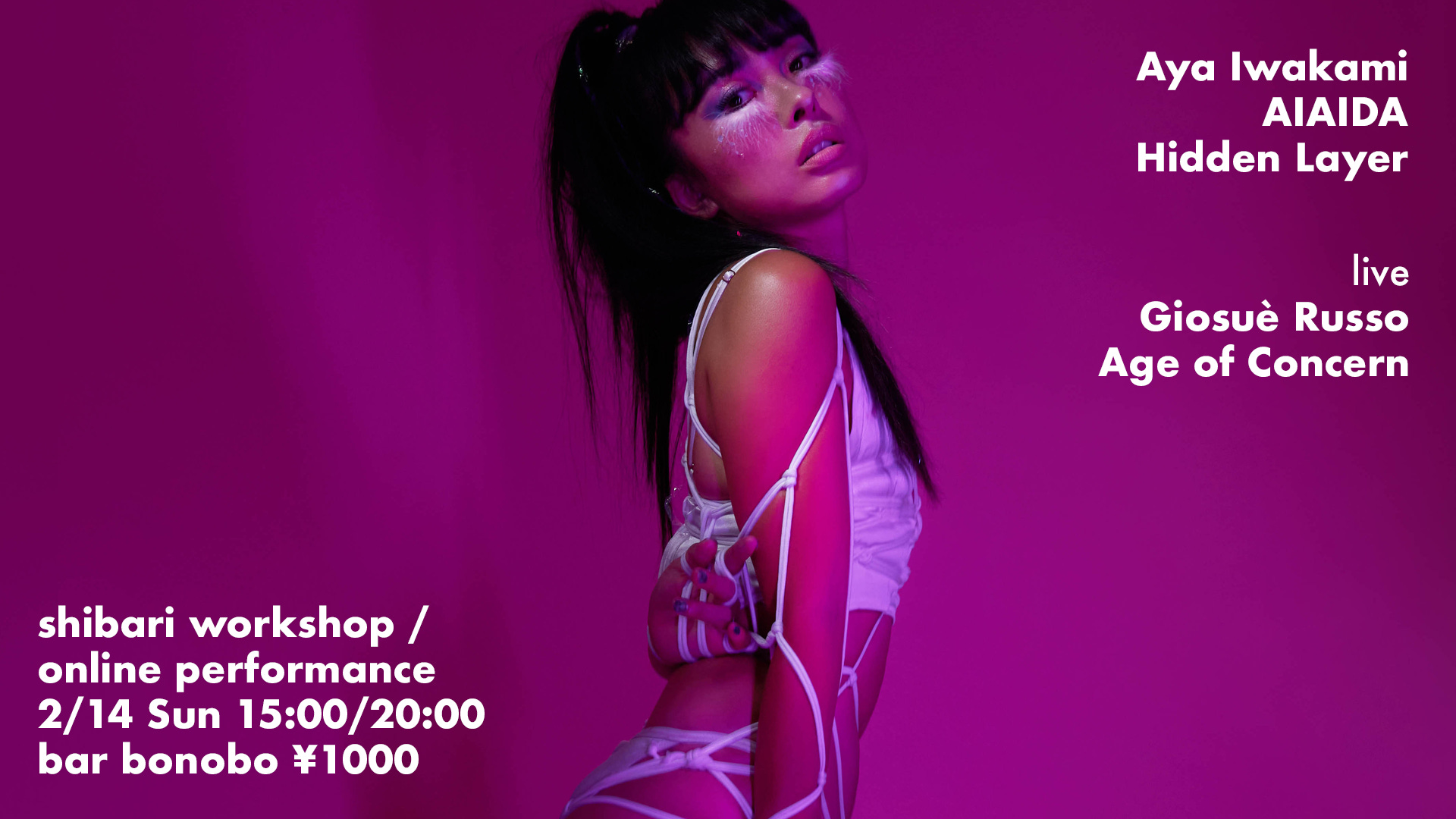
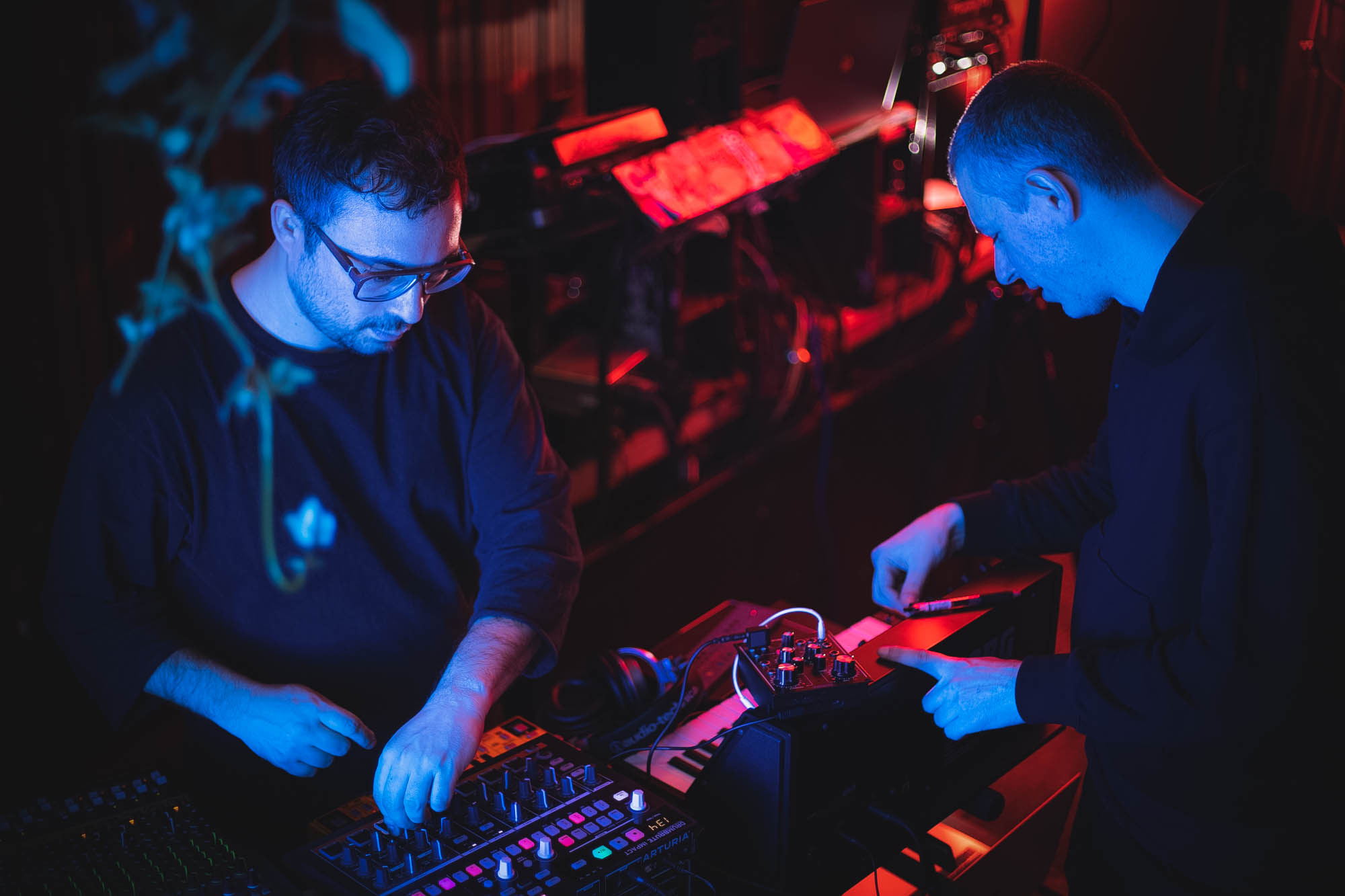
It was February 14th. We didn’t really start with a concept, but we ended up with “Love and self-love.” We brought lots of chocolates from Flying Tiger, and juice. Of course the bar was open, but I also wanted to make sure people were drinking enough and not getting too drunk while learning how to tie -or getting tied for the first time. If you haven’t been to Bonobo (you should), there were three main spaces back then apart from the snack bar at the entrance: a dance floor, a tatami area, and a terrace. We had the workshop in the tatami area, chocolates on the terrace, and then moved to the dance floor for the performance. The concept was similar to what we did in our house, but altogether very different. Our friends Giosuè and David (Onironauta and Log.os) played a hybrid set with live synthesizers. We designed the show with our friend Aya Iwakami, a makeup artist. We wanted to show how Shibari and makeup are connected, how both can be a ritual for self-love, but also an act of care towards someone else.
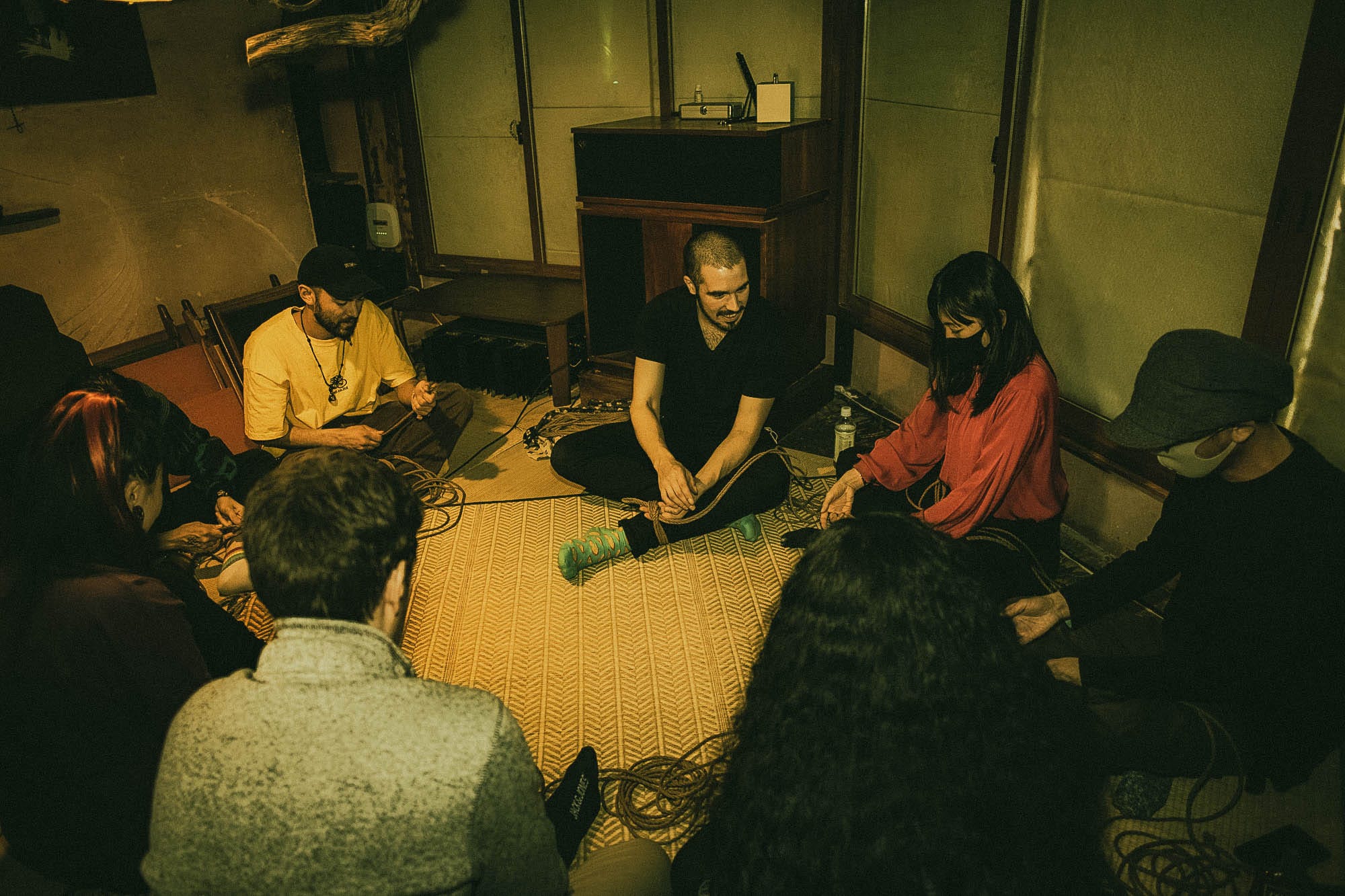
We had a great time, and Bonobo always feels like home. The atmosphere alone opens you towards the unexpected, the perfect context for Shibari to do its magic. I think it was the first time for everyone to tie or get tied. The attendees were our friends in the techno and art community in Tokyo, interested in trying something for the first time, and in creating new ways of communication. It was not an SM party, with children playing around the dance floor, it was not even an adult party. I taught how to do a square knot, and then some ideas on what to do from there, usually a Futomomo (太腿) on yourself or your partner. (If you want to know more about my workshops, you can read about my recent experience in CCC here.) People were amazed at how simple techniques can have such a level of artistry, and the beauty of the patterns drawn by the Japanese Jute, or Asanawa (麻縄), on the body. In Japan Shibari can have a very strong sexual connotation. It is something difficult to describe in simple words and I think I should dedicate more space than this, but to put it simply, it is a private practice. It is not something that you would do in public or talk about with others. Of course thanks to artists such as Hajime Kinoko this is changing rapidly, but I would say that the change is happening overseas more than in Japan itself. For this reason, in this event, everybody was surprised. I think most people approached it with skepticism, to then realize how it can be something casual and fun to play with. That day, I enjoyed tying some of my best friends in Tokyo, laughing with them, and showing them my passion. On the CDJ, a pen drive with a playlist from my incredibly talented friend Lenny Ibizarre was playing. We had a great time.
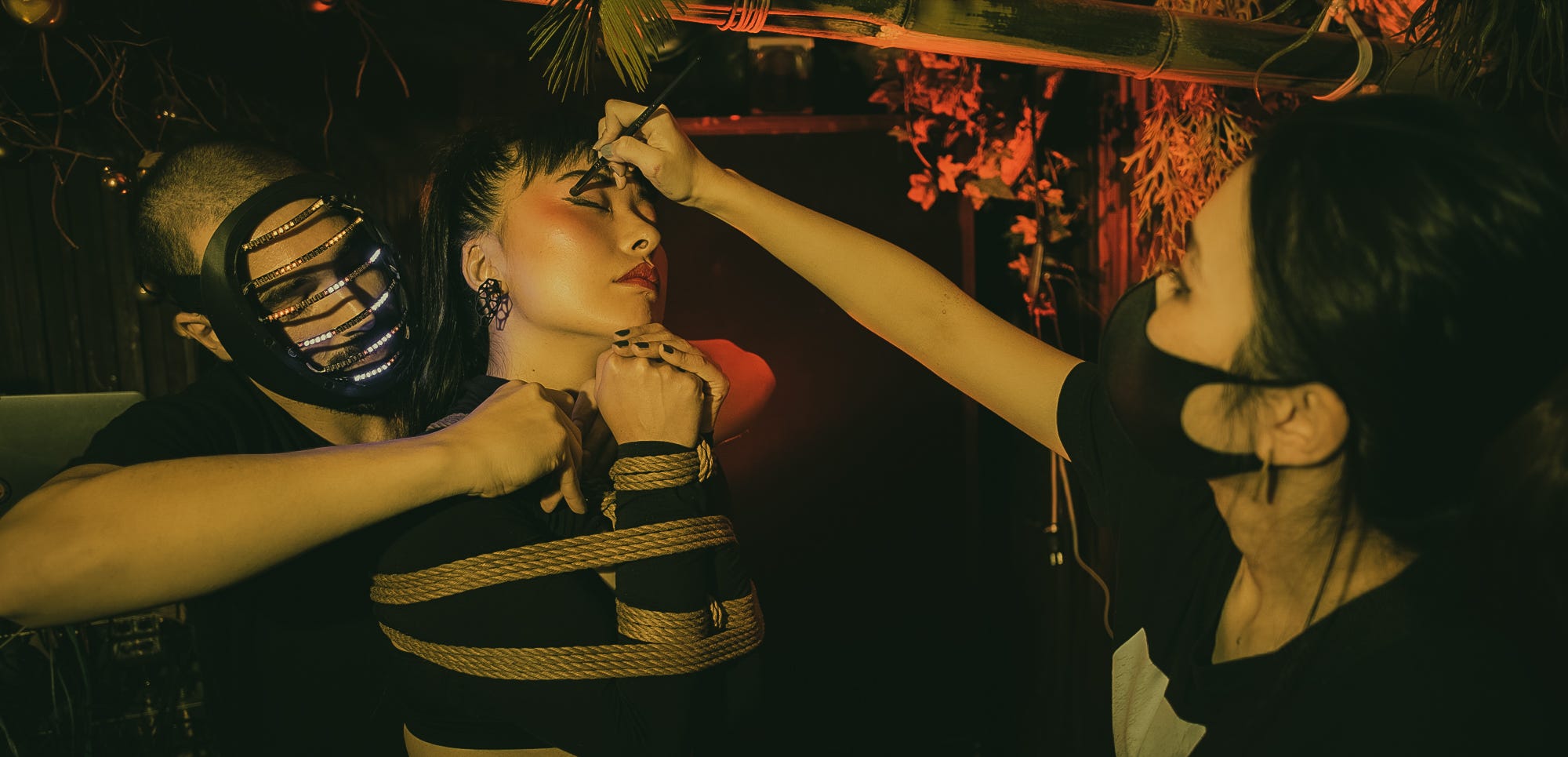
Then we moved to the first floor. The main act was going to start. If we showed the accessible aspect of the ropes, now it was time to display its seductive and mysterious power. Noise, drones, LED lights, audio cables. People stood in the darkness, waiting for something to happen: the ominous presence of the Hidden Layer about to reveal. AIAIDA entered the room wearing a ceremonial mask and a black robe. She sat on a table in front of the audience, and joined the expectation. Then Aya came along. She was wearing a mask, but this one was a sanitary one. She carried a massive set bag packed with makeup utilities, every possible color you could need for your eye shadow. And I joined as well. Myself bringing the two items I use for search, a light mask, and a bunch of rope.
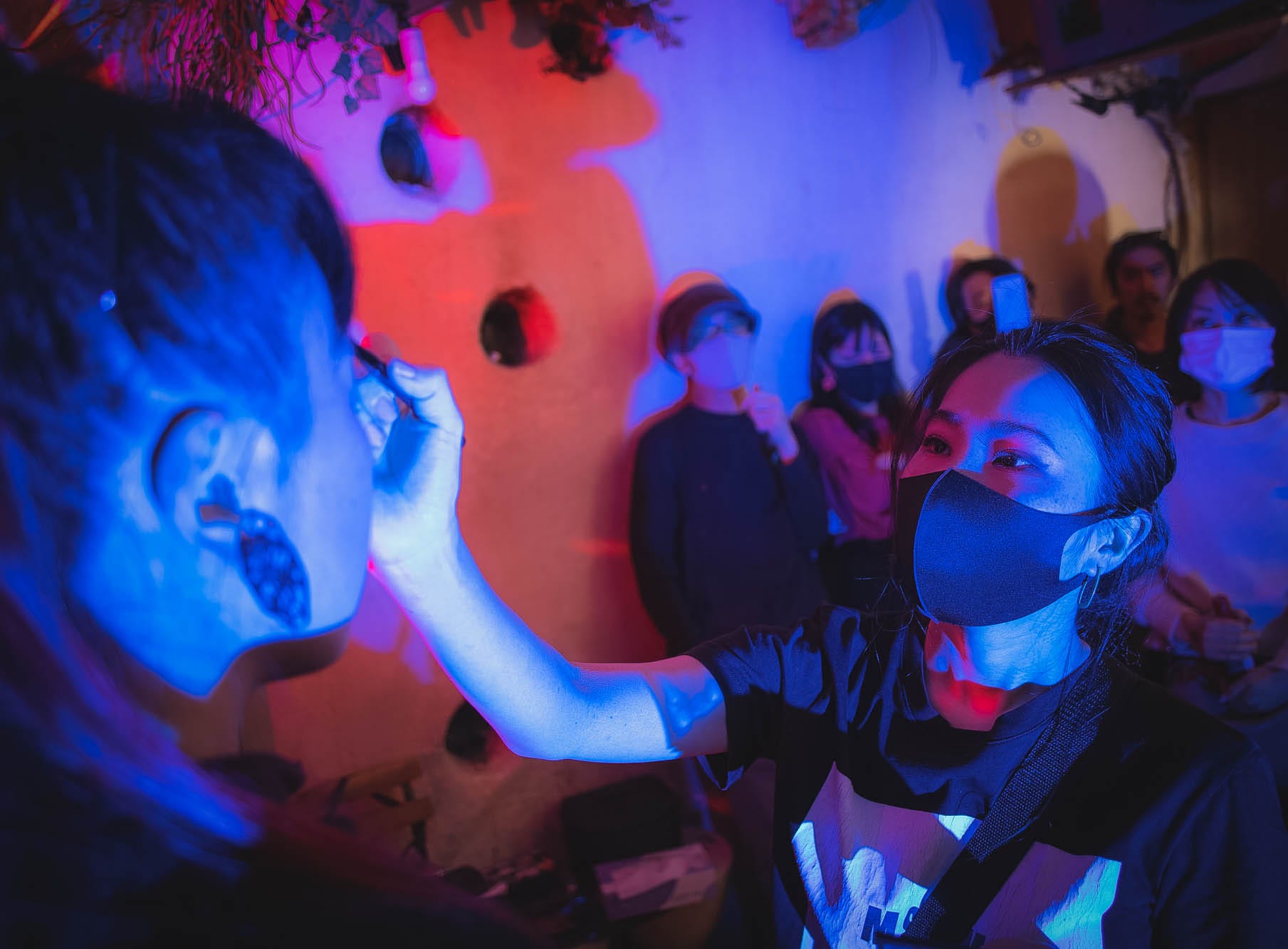
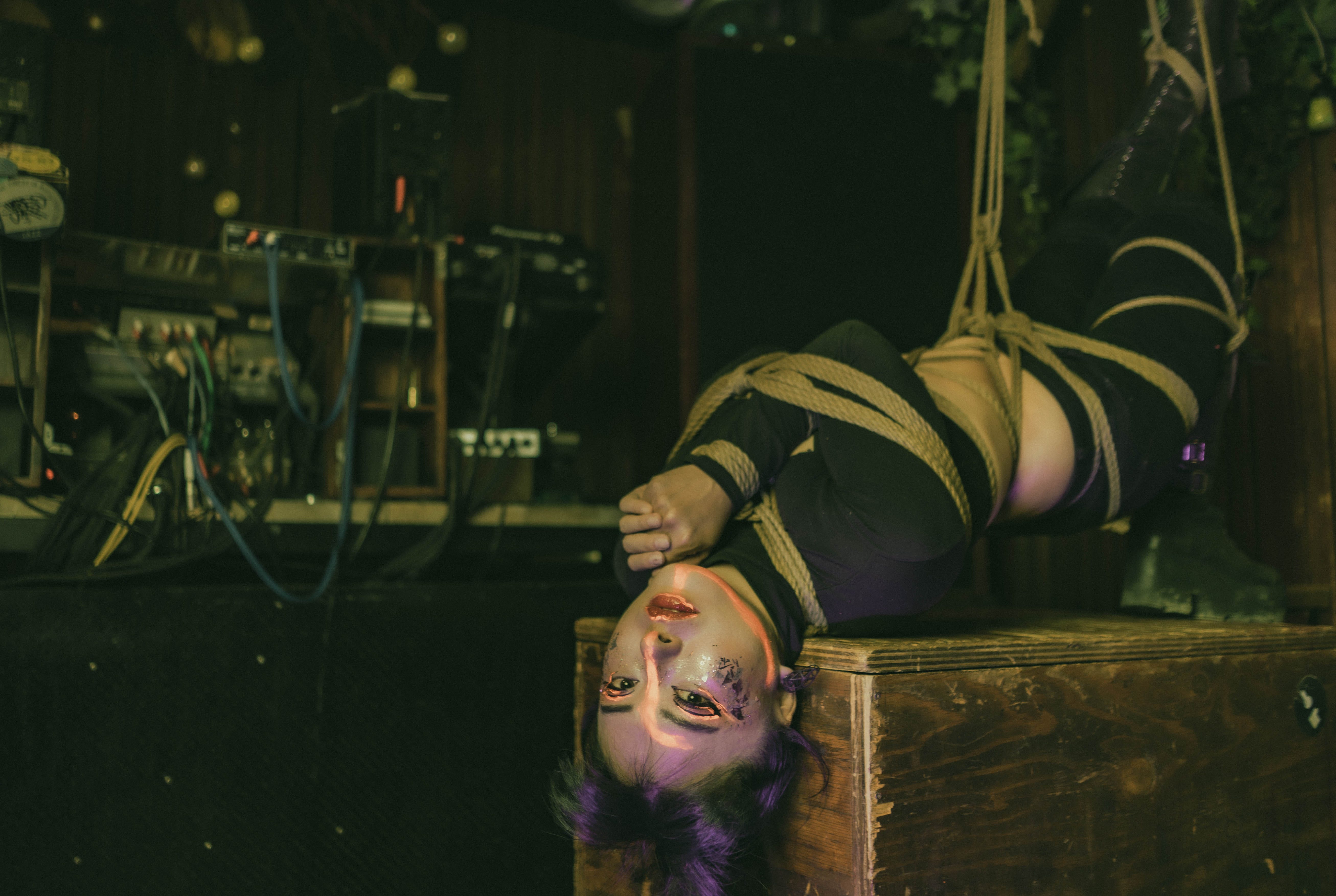
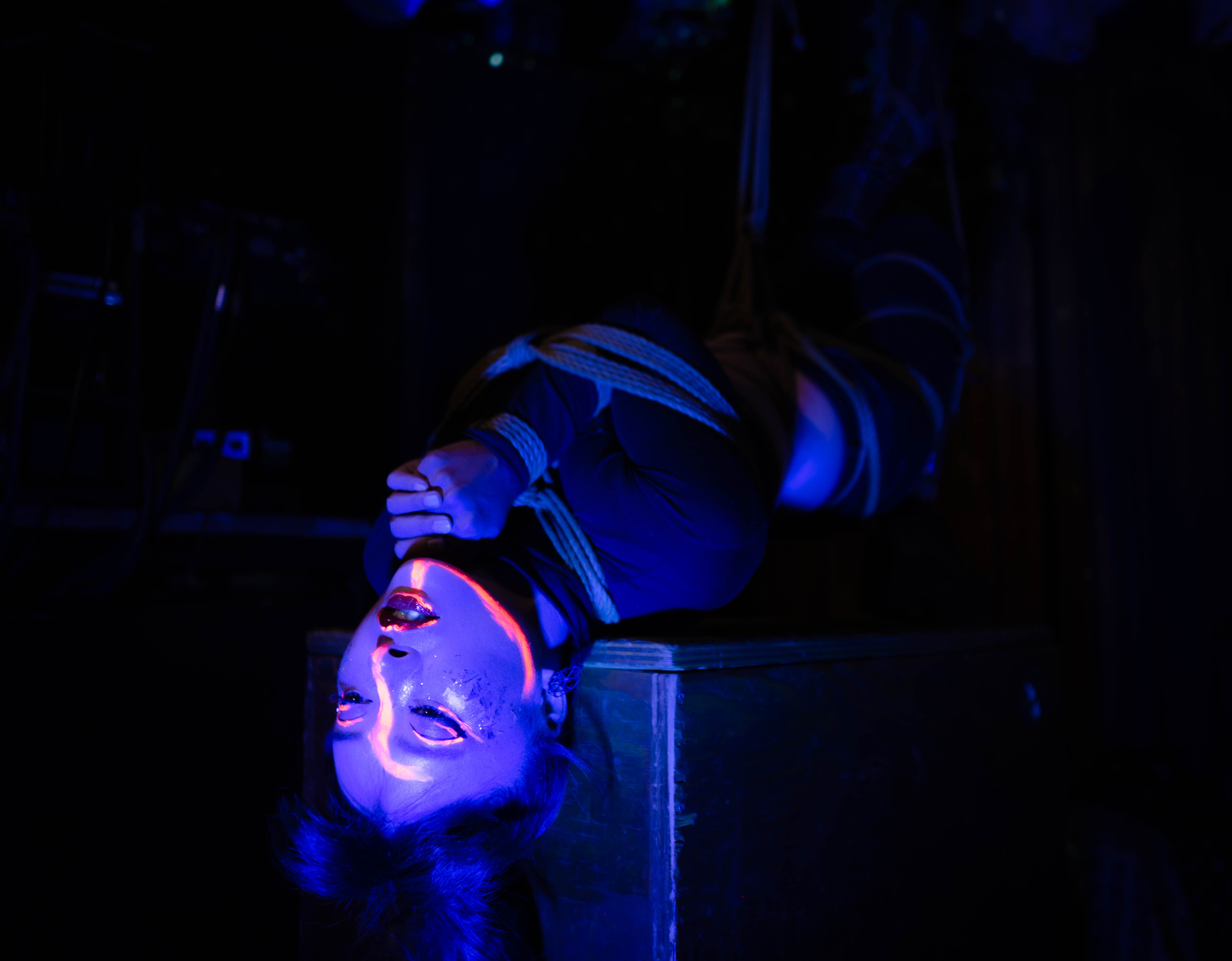
Aya and I alternated in caring for Ai, each of us with our tools and skills: she applying makeup, and me tying her. What does it mean? To tie someone in front of others, to make an object out of a person? To create a symbol with someone, a statue, a representation of something that maybe doesn't exist. A movement with no other intention than to crystalize its intention. To love and self-love. And then the light went off. Natural light left its way for ultraviolet light. The visible became invisible. The invisible became visible. Aya's UV makeup transformed the face of Ai, hanging on an inverted position from a bamboo pole.
This event was minimal: a workshop and a performance. But I was incredibly inspired. I genuinely felt I found something worth pursuing, something I did not understand and wanted to explore deeply. Shibari and music was not new for me, by that time we had already done many performances. But ropes were always the aesthetic aspect and not the central element. I wanted to learn more about the ropes themselves, about their connection with music and other underground artforms. This event was good, but I already felt we needed more. We came from our house to Bonobo and it was incredible, but I realized we would need to find a bigger venue, to collaborate with more artists, to connect more people, to travel further.
I feel incredibly grateful for the experience because I never saw myself as someone who could organize an event. In fact, I didn't feel like we did much. It was as if things unfolded on their own, and we were there, just pulling the ropes.
Now, I'm immersing myself in the world of organizational madness once again. This time, our aspirations are even grander: gathering over 25 artists across two floors at OR, one of Shibuya's biggest clubs. Just like before, we're fortunate to go along with our incredibly talented friends. This endeavor is a journey of shared learning and co-creation—a celebration to life's power, ever expanding, without limits, unbound, interconnected.
Thank you very much for your attention,
Pablo Shibari
If you like this post please consider subscribing to my blog and supporting my work by sharing it with your network. Also, if you are in Tokyo on September 17th, by all means come to Unbound to experience by yourself what I just poorly have tried to describe.